How To Choose A Conversation Intelligence Platform
 Poornima Mohandas
on
March 28, 2024
Poornima Mohandas
on
March 28, 2024
Sellers are no strangers to phone calls. Whether they like it or not, making sales calls is a key part of the job – and essential for hitting their sales targets.
Every conversation between a sales rep and a prospective buyer contains valuable insights. These insights not only help sellers better understand and address buyers’ needs, but they also give sales managers a clear picture of what’s actually happening in the field.
With the right conversation intelligence platform, sellers and sales managers alike can easily tap into these insights to improve buyer experience and sales performance.
There are several conversation intelligence platforms on the market today. While choosing the right conversation intelligence platform can seem daunting, it doesn’t have to be. In this post, we’ll explain what a conversation intelligence platform is, how it can benefit your business, and key factors to consider when choosing the platform that best suits your needs.
What is a conversation intelligence platform?
The conversation intelligence platform is quickly becoming the cornerstone of the sales tech stack for companies who recognize the old methods are no longer sufficient. These systems use artificial intelligence and machine learning to gather and analyze sales conversation data from calls and emails; accurately measure customer sentiment; and compile insights for improved sales performance.
In fact, studies have shown conversation intelligence can drive at least a 64% increase in revenue generated by reps in their first quarter and a 50% average reduction in ramp-up time for new hires.
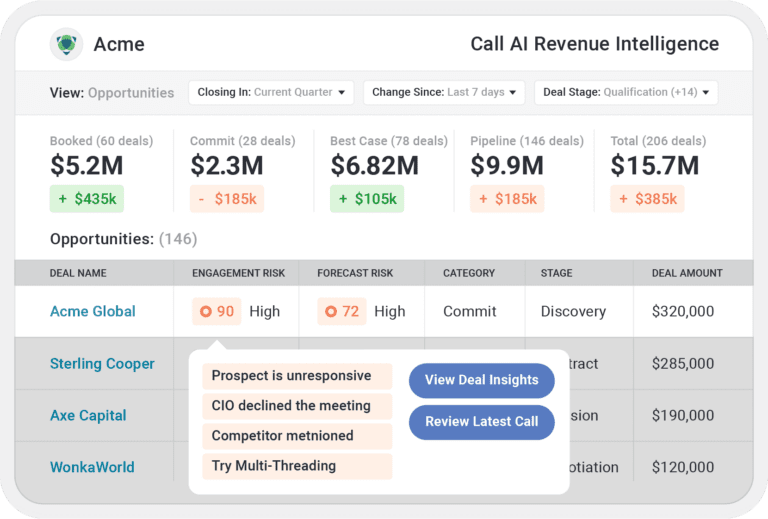
Conversation intelligence technology provides unparalleled insight into conversations with potential customers. It enables more accurate deal health assessment and forecasting by objectively tracking deal risk indicators across 100% of your sales pipeline interactions.
This data also gives managers and reps a single system of record to elevate rep performance during customer interactions, incorporating:
- Call recordings
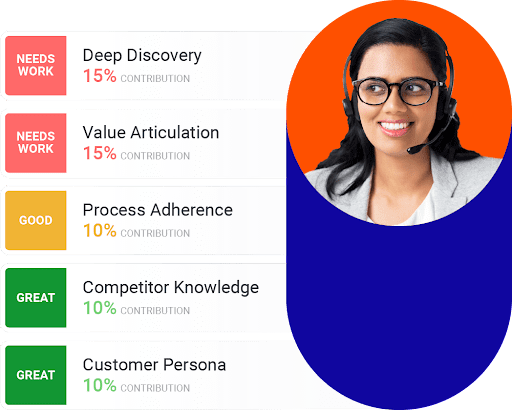
- Call scoring and analytics
- Customer sentiment analysis
- In-line coaching
- Best practices
This visibility is key to identifying opportunities to improve sellers’ skill sets while also helping you understand the tactics top performers are using, so you can ensure salespeople are equipped with the skills and best practices they need to win more deals.
Conversation intelligence helps managers create coaching blueprints to provide the right training and support for salespeople. It also supports faster and more effective hiring and onboarding of new team members.
Common conversation intelligence use cases
Conversation intelligence software works across multiple channels, improving performance and motivation throughout the organization, from sales reps to sales leadership. It enables companies to:
- Help sales reps actively listen instead of note-take and share calls across the organization to facilitate better hand-offs
- Improve conversion rates throughout each stage of the sales process by providing data on what interactions drive deals forward (or not!)
- Help customer-facing roles improve the sales experience
- Make it easier for managers to support and coach sales reps
- Assist leaders in developing effective product and marketing strategies that drive revenue and growth
Today, two-thirds of companies feel their enablement programs fall short. For front-line sales managers, conversation intelligence platforms help them know when to have one-on-one training sessions and how to coach their salespeople in a more relevant and effective manner.
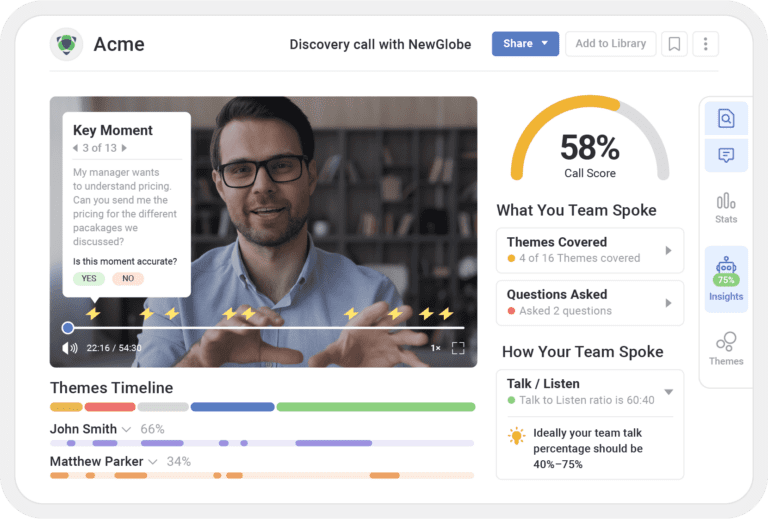
The platform’s sentiment analysis capabilities empower you to keep deals advancing through the sales process or proactively address deal risks while improving metrics like close rates and deal value.
These same capabilities can also help customer success managers improve Net Revenue Retention (NRR) as well as tailor their coaching to reps’ true needs.
For revenue leaders, conversation intelligence means improved deal intelligence — providing complete real-time visibility into the health and status of your accounts’ deals. It also empowers more accurate sales forecasting, helping leaders and teams plan, budget, hire, and allocate resources more effectively.
Lastly, conversation intelligence gives product managers easy access to user feedback so they can make data-informed decisions about product features and priorities.
How can a conversation intelligence platform help you grow your business?
No matter how knowledgeable and experienced a leader is, making effective decisions and driving growth can be challenging without the necessary data and insights. Unfortunately, these are often lacking, which weakens results across organizations.
Sales leaders often have limited visibility into how customers feel about new products and services. As a result, they struggle to pinpoint blockers that reduce productivity.
Revenue teams lack a macro view of how every program and person in the sales organization is performing. They also struggle to track customer interactions, making it difficult to align efforts across teams and develop accurate forecasts.
Enablement leaders have difficulty demonstrating examples of winning behaviors in their training programs or measuring the impact of their efforts on business outcomes.
Conversation intelligence provides the insight you need to overcome these challenges and drive growth by providing 100% visibility into calls.
This helps you improve the customer experience both during the sales process and in the successful adoption of your solutions after the deal is closed.
For sellers, productivity improves because they have access to a unified platform where they can find everything they need, including the transcript and a list of action items or next steps, as well as get immediate feedback after their calls.
And for your go-to-market strategy, conversational intelligence offers individualized, high-value analytics and reporting, insight into the voice of the customer, sentiment analysis, and suggestions to improve messaging to align with the customers’ needs.
8 considerations for choosing a conversation intelligence platform for your business
Investing in a conversation intelligence platform can have a positive impact on your business. But there are many different conversation intelligence platforms on the market today, and they’re not all the same.
It’s important to find a conversation intelligence platform that aligns with the unique needs of your business. To help with this, here are eight factors you’ll need to consider.
Nearly every function at your company can benefit from and use conversation intelligence — from sales leadership to product, marketing, managers, reps, enablement, and operations. Look for a solution that’s easy for each of these groups to use. A simple, intuitive solution will lead to greater adoption, which will increase ROI.
Sales calls are rich with insights that can shape sales coaching, strategy, and forecasting. It’s essential that a conversation intelligence platform accurately records, transcribes, and analyzes these calls. Without a high degree of accuracy, there’s a risk of making decisions and shaping strategies based on incorrect information.
Conversation intelligence provides powerful insights into key deals and accounts. But building a business deal by deal won’t scale. Instead, look for a solution that helps you uncover the ideal competencies that lead your top reps to crush quota and achieve sales outcomes. We call those “winning behaviors,” and we use data from real conversations to model them out.
One key to successfully implementing a new software solution is to choose a platform that adapts to your team members’ workflow rather than making them adapt to it. Finding the right fit will make collaboration between departments easier, visibility more targeted, and teams more organized and productive.
To avoid unnecessary legal issues, reputation damage, or hefty fines, you need to make sure your conversation intelligence platform is secure and compliant. This allows you to safely and consistently offer top service.
Today, more than 63% of sales leaders indicate they have at least 10 tools in their tech stack. So it’s not surprising that 70% of sellers are overwhelmed by the number of tools they’re expected to use. Disparate tools can make sellers’ lives harder, rather than easier. Furthermore, they can create data silos. So when considering conversation intelligence platforms, it’s important to find one that seamlessly integrates with your existing tech stack.
Every revenue organization is unique, which means there’s no “one-size-fits-all” conversation intelligence solution. Instead, seek out a conversation intelligence platform that offers flexibility and can be customized to the needs of your organization.
When you hear the word “value,” price might be the first thing that comes to mind. Pricing does matter, and it’s important to find a conversation intelligence platform that fits your budget. However, it’s just as important to consider the value the platform will deliver to your business. If one platform costs more than another but offers a higher ROI through time savings and improved sales performance, it can be well worth the investment.
Features to look for when considering a conversation intelligence platform
Each conversation intelligence platform comes with a unique set of features and benefits. It’s important to find a solution that aligns with your needs.
That said, there are certain key features any conversation intelligence solution should have. Let’s explore 10 must-haves.
Accurate recording and analysis is the foundation for accurate analysis. Be sure any conversation intelligence solution you are considering offers highly accurate recordings and transcriptions of sales conversations. The platform should be able to easily record conversations and convert them to text with high accuracy – even for varied vocal patterns and noisy environments.
Look for a conversation intelligence platform that provides call scores after each sales conversation. These scores help sellers understand how they performed and enable sales managers to look for trends and opportunities for coaching.
Sentiment analysis provides insight on the tone and emotions behind what a prospect is saying, which can help the seller understand how the prospect feels. This information helps both reps and managers spot potential issues early on and be prepared to address them.
Every successful sales rep understands the importance of timely follow through. A conversation intelligence solution should have the ability to identify tasks and follow-up actions mentioned during a call, such as scheduling a meeting, sending a piece of sales collateral, or circling back on a question or concern. That way, critical tasks aren’t overlooked and sellers can follow up quickly to keep deals on track.
The insights from a single sales call can benefit numerous teams and individuals. If a conversation intelligence platform has call sharing capabilities, you can easily share recorded or transcribed calls with others in the organization.
Call recordings can help sales managers identify areas where a seller may need additional coaching. Choose a conversation intelligence platform that has embedded coaching forms, which make it easier for you to deliver coaching that improves the outcome of a specific deal – as well as the rep’s long-term skills and behaviors.
Sales reps often work remotely. It’s important to ensure your chosen conversation intelligence platform is easily accessible and functional from any device.
There are likely tools and technology that your sales teams use on a daily basis. It’s important to find a conversation intelligence platform that seamlessly integrates with these existing technologies, including your CRM. This allows for a more cohesive workflow and better data synchronization.
Data is key to improving sales processes and seller performance. Seek out a conversation intelligence platform that offers robust data and analytics at both the team and individual rep levels.
Sellers and managers often lack the time to listen to lengthy call recordings. Look for a conversation intelligence platform that leverages an AI assistant to quickly surface insights from calls. For example, a seller can ask the AI assistant to identify the objections a prospect raised during their last call. The rep can use these insights to properly prepare for their next interaction with the buyer.
Unlock the call insights you need to close more deals with Mindtickle
Sales conversations are full of insights that can help you improve buyer experience and sales performance. With the right conversation intelligence platform, you can unlock the insights you need to understand your buyers and deliver experiences that align with their expectations.
But chances are, you’ve already got several tools in your sales tech stack. Rather than adding a stand-alone conversation intelligence solution to the mix, consider investing in an integrated revenue enablement platform with conversation intelligence tools.
Mindtickle is an award winning revenue enablement platform with conversation intelligence tools built right in. With Mindtickle, your sellers always have easy access to the training, content, call insights, and coaching they need – all in one place. That means sellers can spend less time searching for what they need and more time delivering outstanding experiences that win buyers.
Conversation Intelligence in Mindtickle
Ready to see how Mindtickle’s conversation intelligence tools can give you complete visibility into real-world interactions with customers across your organization?
Request a DemoThis post was originally published in January 2023 and was updated in January 2024 and March 2025.